You’ve Been Lied To About Video AI’s Real Breakthrough
Generation was never the hard problem. You’ve been trained by tech demos to gasp at prompts turning into pixels, but that’s the easy part. The real test — the one that separates toys from tools — is native editing. Not re-rendering, not re-imagining from scratch, but surgically altering what already exists through conversation alone. Gemini Omni just aced that test, and most of the AI world missed why it matters.
The Architectural Line in the Sand
JulieLovesTech framed it bluntly: “native video editing through conversation is the feature that separates it from every other video AI. generating is one thing. editing existing footage natively without re‑rendering from scratch is a completely different technical problem.” That’s not marketing hype. It’s an indictment of the default pipeline approach. Traditional workflows force video through a text bottleneck, serializing frames into descriptions and losing the very things that make video reasoning possible — prosody, timing, scene-cut information. spanlens hammered this point: “Pipelined adds two serialization boundaries you can never engineer away on latency, and the text bottleneck throws out prosody, timing, and scene‑cut info, which is where most video reasoning actually lives.” Native editing bypasses that graveyard entirely, reasoning directly over the audiovisual signal.
The Lumière Test That Shames Skeptics
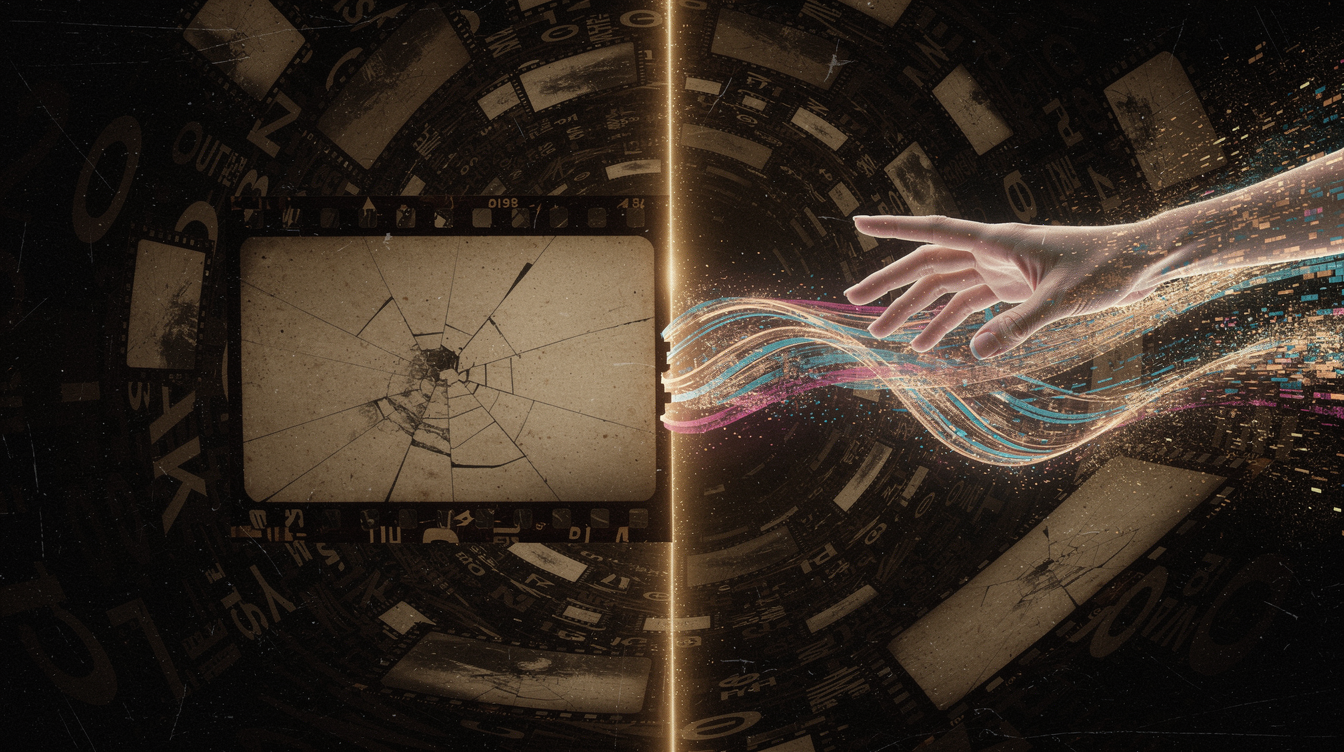
Ethan Mollick didn’t issue a white paper. He took the 1896 Lumière Brothers classic and, with a single open‑ended prompt, turned it into five distinct edits: bullet train, LEGO, time traveler, centipede, and Muppets. Then he responded to a far harder gauntlet: make it as frightening to modern eyes as the original was to its first audience. The result wasn’t a garbled re-generation; it was a coherent, stylistically anchored transformation. When Primus dismissed a frame as “a fake AI vid” because a top hat looked too symmetrical, the objection missed the entire point. The carping about surface imperfections ignores the structural miracle: the system preserved spatial relationships, motion continuity, and scene logic without a full re-render.
The Cost Trap Is Real, And It’s a Warning
Mark s. fired the shot nobody wants to hear: “Native video edits mean every iteration burns input tokens on the source clip plus output tokens on the generation. Watch Gemini’s video pricing tier get its own SKU within a quarter, the per‑second math doesn’t survive shared quota.” This isn’t doomsaying; it’s arithmetic. Native editing’s power directly correlates with token consumption, and that will carve a harsh line between tinkerers and production pipelines. Combine this with Armin Catovic’s broader gripe — that video models “simply lack consistency and instruction following” — and you get a sobering picture. The leap is real, but it’s expensive and still wrestles with obedience, especially at scale.
Muppet Movies and the End of the Generation Era
The creative x‑posts told the real story. Anna exclaimed, “so basically now we can take any events we want and make a 1/1 muppet version.” BongBong declared, “The script of the next Muppet movie is now a lock.” This isn’t child’s play; it’s a format unlock. When you can reshape existing footage into entirely new narrative skins without breaking continuity, video stops being a fixed artifact and becomes a workable medium — like text in a word processor, not like a painting in a vault. That’s the difference between generating a one‑shot clip and editing video as a first‑class knowledge format. The native edit is the interface that makes that possible.
Native Editing Won’t Wait for Your Skepticism
The cynics and the cost‑accountants will parse the token burn and the occasional symmetry flaw. They’ll point to competing toys and pronounce the entire thing a lab stunt. They’re wrong. Gemini Omni’s native editing doesn’t just leapfrog re‑rendering pipelines; it redefines what a video model is supposed to do. Every future work format that demands malleable, context‑aware video — from forensic analysis to interactive entertainment — runs through this door. The architecture that preserves timing and prosody while letting you talk to a clip rather than write code for it is the only architecture that matters now. Everything else is just generating expensive confetti.