
Content Generation
Page 1 of 3

SwiftVR: Real-Time Generative Video Restoration on Consumer GPUs
SwiftVR is a streaming one-step generative video restoration framework for live-stream applications. It addresses consumer GPU bottlenecks with mask-free shifted-window self-attention and a lightweight autoencoder, achieving real-time 1080p streaming on consumer-grade GPUs and 4K on H100.

Emoji-Only Prompts Drive AI Image Generation Experiment on r/ChatGPT
An r/ChatGPT user, u/FineTime5266, details experiments with AI image generation using only emoji prompts, showcasing surprisingly good results. The post includes example emoji strings and an AutoModerator message regarding prompt sharing and Discord community engagement.

How NAVA Generates Synchronized 720p Audio-Video from a Single Prompt
NAVA is a 6.3B-parameter joint audio-video generator that synthesizes synchronized 720p video and audio from a single prompt. It utilizes an Align-then-Fuse MMDiT architecture to establish audio-video correspondence, offering features like multi-speaker speech with timbre control, fast generation, and language-described camera control.
The $6,600 MOBA: What Claude 4.8's Weekend Game Build Reveals About AI Development
A web-based MOBA game, lmaomoba.com, was built by Claude 4.8 (Opus) over a weekend, from a single prompt, using TypeScript, React, Canvas, and PartyKit. All art assets were AI-generated. The project, estimated at 2.7 billion tokens, highlights AI's capacity for rapid, full-stack game development and the associated token costs.

Prompting Claude for Critical Feedback and Deeper Insights
User-derived strategies for optimizing Claude's performance in writing and research. Learn how to prompt for critical feedback, effectively manage long contexts, and leverage editing over generation to achieve more specific, insightful AI outputs.

SANA-Streaming: Real-time Video Editing with Hybrid Diffusion Transformer
SANA-Streaming introduces a hybrid diffusion transformer and Cycle-Reverse Regularization for real-time streaming video editing. Optimized for NVIDIA Blackwell (RTX 5090), it achieves 1280x704 resolution at 24 FPS with superior temporal coherence and throughput on consumer GPUs.
How UNISON Unifies Audio and Speech Generation with Deep LLM Fusion
UNISON is a unified latent flow-matching framework for audio and speech generation and editing. Using a single set of weights, it integrates text-to-audio, text-to-speech, zero-shot speaker cloning, mixed speech-and-sound scene generation, and audio/speech-in-scene editing—all in one model, one architecture, one forward pass, leveraging deep LLM fusion with Qwen2.5-Omni-7B.

Philosophy, Not Just Data, Holds the Key to Deeper AI
This article argues for integrating philosophical principles into AI priming to achieve more profound and ethically sound artificial intelligence. Moving beyond data-centric training, it explores how philosophical frameworks can enable AI to generate more meaningful and contextually rich responses.

What is Ideogram 4: The Open-Weight Text-to-Image Foundation Model?
Ideogram 4 is Ideogram's first open-weight text-to-image foundation model, trained from scratch. It features a new structured JSON prompting interface, best-in-class multilingual text rendering, deep language understanding, explicit layout/color controls, and native 2k resolution. It leads open-weight models in Design Arena and ContraLabs typography evaluations.
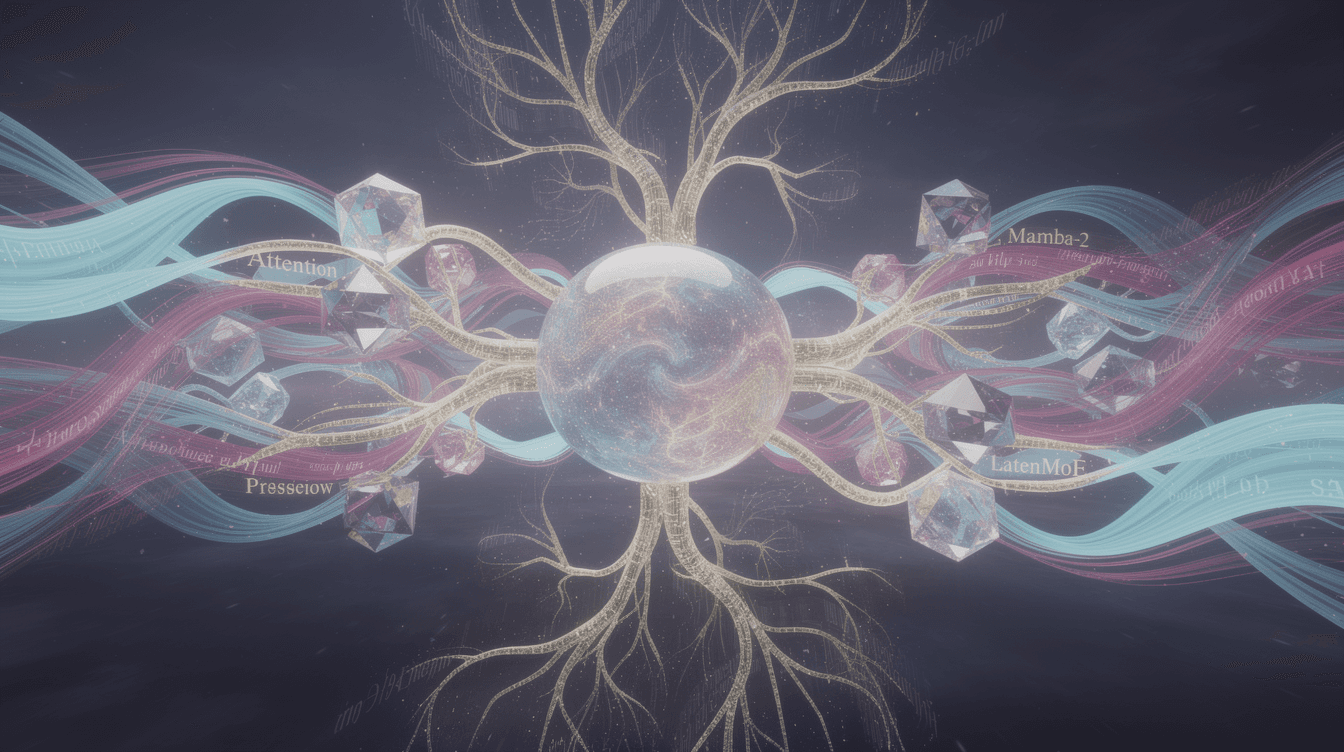
NVIDIA Nemotron-3-Ultra 550B: A Frontier LLM for Complex AI Workflows
Nemotron-3-Ultra-550B-A55B-BF16 is a frontier-scale LLM by NVIDIA, featuring a LatentMoE architecture, Mamba-2 + MoE + Attention hybrid, and Multi-Token Prediction. Designed for complex multi-step agents, long-context analysis, and high-accuracy reasoning across multiple languages, it offers configurable reasoning and is released under the OpenMDW License.

Claude Opus 4.8: The Case of Recursive Doubt and Entangled Reasoning
User reports on Reddit highlight concerning patterns in Claude Opus 4.8, including self-contradiction within its extended thinking, high token consumption, and "spinning" behavior, raising questions about its reasoning stability.

The Fable Prompt Technique: Building Understanding from the Inside Out
Explore Amanda Askell's Fable Prompt Technique, a powerful method for conceptual understanding. This Anthropic-originated approach uses indirect narrative and cognitive friction to build robust mental models, mirroring Claude's alignment philosophy.