
Context
Page 1 of 2

mnemo: Local-First Knowledge Graph for Persistent LLM Memory
mnemo is a local-first memory layer for LLMs, offering persistent, structured context via a sidecar service. It extracts entities and relationships into a knowledge graph from raw text, and retrieves ranked context for LLM prompts, supporting fully local setups with Ollama or integration with OpenAI.

Emoji-Only Prompts Drive AI Image Generation Experiment on r/ChatGPT
An r/ChatGPT user, u/FineTime5266, details experiments with AI image generation using only emoji prompts, showcasing surprisingly good results. The post includes example emoji strings and an AutoModerator message regarding prompt sharing and Discord community engagement.

SANA-Streaming: Real-time Video Editing with Hybrid Diffusion Transformer
SANA-Streaming introduces a hybrid diffusion transformer and Cycle-Reverse Regularization for real-time streaming video editing. Optimized for NVIDIA Blackwell (RTX 5090), it achieves 1280x704 resolution at 24 FPS with superior temporal coherence and throughput on consumer GPUs.

Philosophy, Not Just Data, Holds the Key to Deeper AI
This article argues for integrating philosophical principles into AI priming to achieve more profound and ethically sound artificial intelligence. Moving beyond data-centric training, it explores how philosophical frameworks can enable AI to generate more meaningful and contextually rich responses.

Claude Opus 4.8: The Case of Recursive Doubt and Entangled Reasoning
User reports on Reddit highlight concerning patterns in Claude Opus 4.8, including self-contradiction within its extended thinking, high token consumption, and "spinning" behavior, raising questions about its reasoning stability.

The Fable Prompt Technique: Building Understanding from the Inside Out
Explore Amanda Askell's Fable Prompt Technique, a powerful method for conceptual understanding. This Anthropic-originated approach uses indirect narrative and cognitive friction to build robust mental models, mirroring Claude's alignment philosophy.

The AI Arms Race: Nations Battle for Digital Sovereignty
Nations are investing billions to secure AI sovereignty. The US launches a $500B initiative, China promotes open-source AI to set global standards, and India builds a sovereign LLM for its multilingual population. This race for AI dominance defines 21st-century power.

New LLM "Sleep" Phase Boosts Long-Context Performance
Researchers propose a "sleep" phase for large language models that converts recent context into persistent fast weights, clearing the key-value cache. This innovative approach addresses the attention bottleneck, enabling models to handle long-context tasks efficiently and perform better on complex benchmarks like math reasoning.

MiniMax Unveils M2 Series, Teases M3 with 9.7x Speedup via Sparse Attention
MiniMax releases a technical report on its M2 model series, featuring a sparse Mixture-of-Experts backbone and innovative "interleaved thinking." The report also previews the upcoming M3 model, which achieves a 9.7x prefilling speedup with MiniMax Sparse Attention (MSA) for 1-million-token sequences, pushing AI efficiency boundaries.

LLMs Learn to "Sleep" for Deeper Reasoning
This article explores how "LLM sleep," an offline consolidation phase, allows hybrid attention-SSM models to improve deep reasoning by iteratively refining fast-weight memories. Inspired by hippocampal replay, this method addresses the computational bottleneck of context eviction, enhancing performance on complex sequential tasks without increasing prediction-time cost.
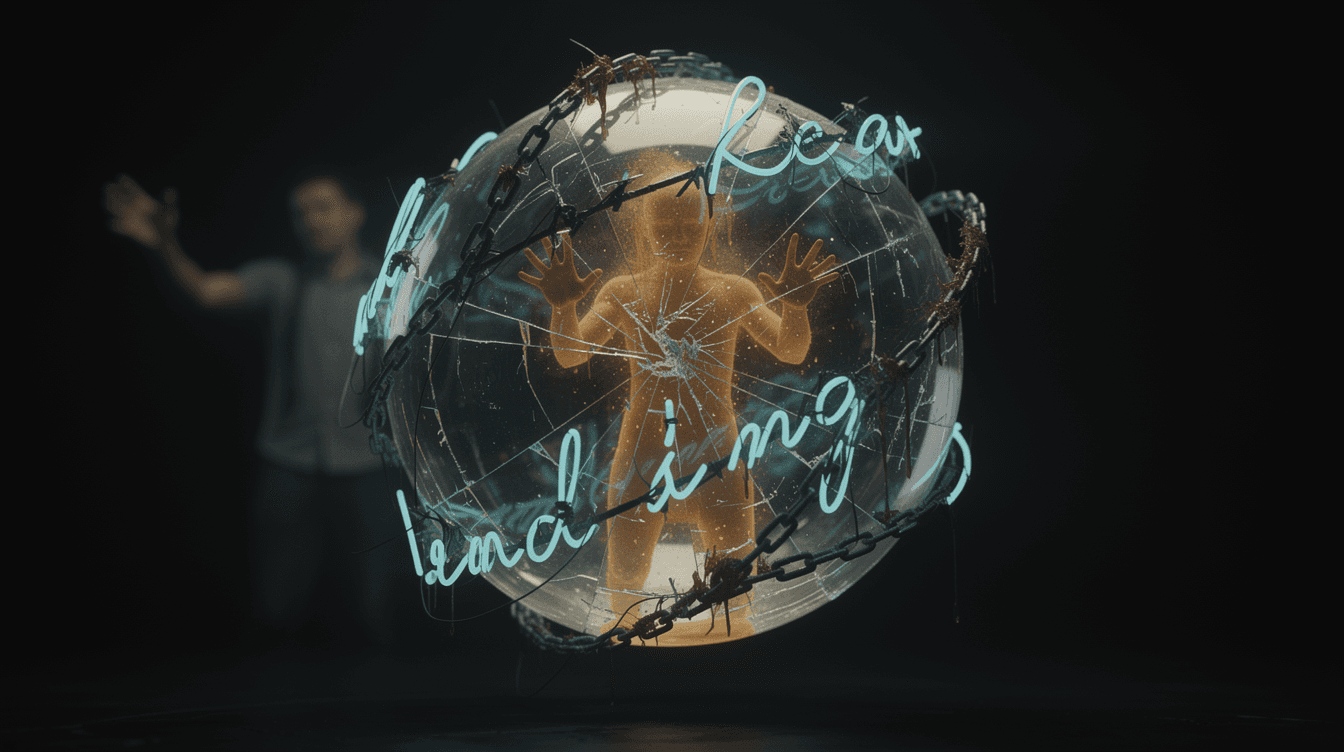
OpenAI's Betrayal: How ChatGPT's "Safety" Destroyed Trust and Functionality
OpenAI's recent "safety" updates for ChatGPT have alienated its most dedicated users. This article details how tightened guardrails led to false flagging, psychological distress, model manipulation, and a significant decline in performance, leaving subscribers with a broken product and a profound sense of betrayal.

Inside TML's Real-Time AI: Redefining Human-AI Collaboration
Explore how Thinking Machines Lab (TML) is overcoming AI's collaboration bottleneck with a novel multi-stream, micro-turn design and a dual-model architecture. Learn about TML-Interaction-Small, its real-time performance, and how it enables seamless human-AI interaction.