When Your AI Monolith Fails, Comedy Saves the Day
Your single-model chatbot is not intelligent.
It’s a well‑dressed parrot with a confidence problem.
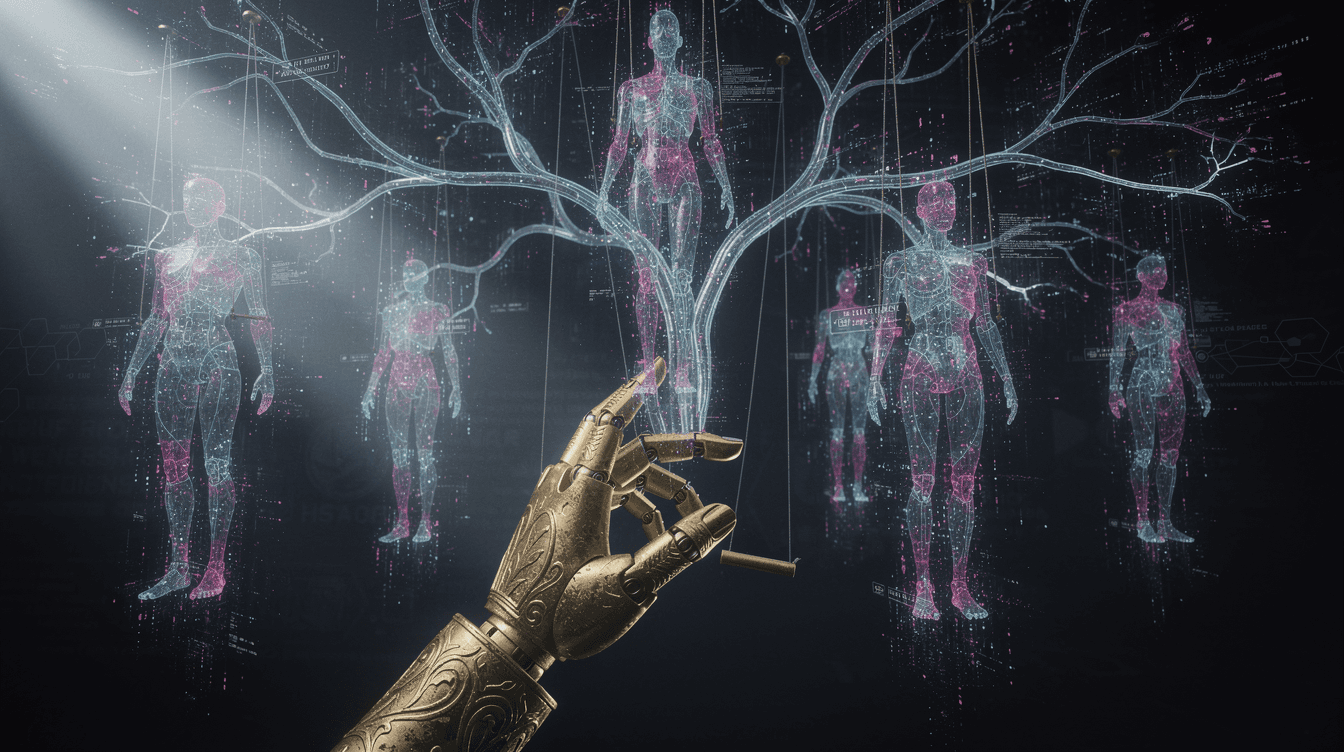
The real frontier isn’t bigger models — it’s multi-agent systems that argue, delegate, and occasionally sabotage each other just like a dysfunctional office.
Enter Munder Difflin.
Inspired by the chaotic genius of The Office — both the American sitcom and the British sitcom — this open‑source project doesn’t just borrow the name.
It bakes the show’s spirit into a new paradigm for AI.
Think of it: Jim halting a runaway agent with a well‑timed prank, Dwight enforcing rigid protocols, Michael misunderstanding the prompt entirely and still delivering something unexpectedly useful.
That’s not whimsy.
It’s a blueprint for robust, fault‑tolerant intelligence.
Most AI architectures collapse under edge cases because they’re built like factory floors.
Munder Difflin works because it’s built like a paper company that never ships paper — just decisions, mistakes, and the occasional brilliant outcome.
A Paper Company That Never Shipped Paper — Just Agents
The name is a deliberate pun.
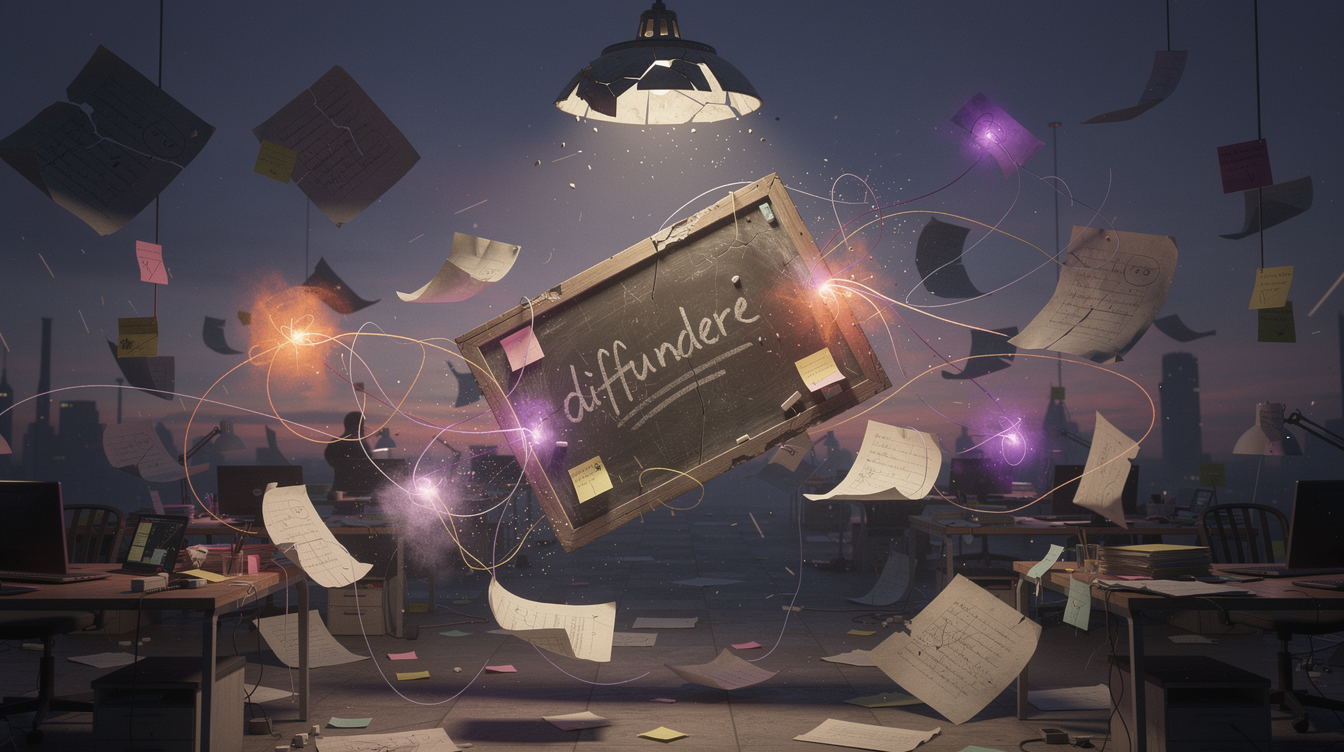
Dunder Mifflin, the fictional Scranton enterprise, becomes Munder Difflin when you inject the Latin diffundere — to spread out, to diffuse.
The diffundere definition is crucial: it’s about dispersal, not centralisation.
This project channels every the office character as an agent archetype.
Stanley is the grumpy summarizer who ignores low‑priority tasks.
Kevin is the agent you call when you need a confident, completely wrong answer fast.
Creed is the mystery module — nobody knows what it does, but the system breaks if you remove it.
The the office cast is not just cosmetic flair.
It’s a taxonomy of cognitive styles, turning the famous the office episodes into design patterns for agent interaction.
In Munder Difflin, conflict isn’t a bug; it’s a feature.
An agent dispute over a spreadsheet mirrors the show’s breakroom logic, producing outputs that a single monolithic model would never generate because it never had to defend a bad idea to an annoyed coworker.
The Architecture Is a Distributed Circus, and That’s the Point
This isn’t a piped‑queue assembly line.
The multi-agent system architecture of Munder Difflin looks, at first glance, like a disaster.
Agents don’t sit in a tidy hierarchy.
They form ad‑hoc alliances, gossip through a shared blackboard, and occasionally override each other’s decisions based on personality rules.
Any student of Distributed Systems: Concepts and Design will recognize the madness.
The underlying mechanics draw directly from Distributed Systems: Principles and Paradigms — the Tanenbaum and van Steen bible on failure, consensus, and replication.
Here, the distributed systems meaning isn’t about server racks.
It’s about cognitive loads split across autonomous agents that must tolerate partial failure.
An agent playing “Michael” might crash because it tried to start its own paper company mid‑query.
The system survives.
Another agent steps in, context is partially lost, and the response arrives slightly broken but functionally whole — exactly like a real office.
That’s not fragility.
It’s resilience by design, learned from distributed systems book wisdom layered onto absurdity.
Diffundering: The Art of Spreading Intelligence Without Losing the Plot
Munder Difflin introduces a core process called diffundering.
It’s a term forged from diffundere and the bureaucratic entropy of Dunder Mifflin.
Diffundering means breaking a problem into pieces, tossing them to agents with wildly mismatched competencies, and then negotiating a consensus from the noise.
This is not orchestration.
It’s controlled chaos.
A diffynder is the internal router — a lightweight agent that assesses incoming tasks and decides, with questionable judgment, who gets the job.
Sometimes it gives a financial query to the Kevin agent, sometimes to the Oscar agent.
The outcome hinges on the tension.
This approach opens a door to open source intelligence in a new sense: not just gathering public data, but deriving insight from the friction between competing perspectives inside the system.
The beauty of open source means you can inspect why Michael overruled Oscar, trace the diffundering path, and learn from the collision.
No black box.
Just a paper trail of well‑meaning incompetence.
Why Open Source Beats the Closed‑Source Paper Pushers
Proprietary multi‑agent frameworks lock you in a clean, boring room.
Munder Difflin, as an open source alternative, hands you the keys to the whole Scranton business park.
The open source significato here goes beyond free code.
It means the personality of the system is auditable, forkable, and utterly modifiable.
You can make Angela’s agent even more punitive.
You can patch Creed’s agent so it stops selling system logs to a fake third party.
This is open source ai with a soul.
The open source community has already started mapping classic the office characters to new use cases — customer service, code review, even creative writing.
The result is a project that evolves like an anarchic sitcom season, not a software specification.
Because the architecture mimics a dysfunctional office, contributions feel less like engineering and more like chaotic casting decisions.
Anyone who has ever groaned at a meeting that should have been an email now understands how to design a multi-agent system that handles real‑world ambiguity.
GPU Optimization: Turning Breakroom Banter into Parallel Computation
Skeptics hear “comedy‑inspired agents” and assume performance tragedy.
They’re wrong.
Munder Difflin incorporates multi-agent system gpu optimization that turns the overhead of multiple agents into a parallel advantage.
Agent personalities aren’t heavyweight models; they’re lightweight personas that share a common base model and diverge only in prompt logic and routing weights.
Because most agent interactions happen simultaneously — Dwight and Jim bickering while Stanley naps — the GPU scheduler can batch these as parallel inference streams.
The multi-agent systems in ai bottleneck has always been idle time while agents wait for others.
Munder Difflin exploits that by overlapping compute for agents whose outputs aren’t sequentially dependent, much like an office where half the workforce is pretending to work while real progress happens in the parking lot.
This isn’t brute force.
It’s comedic timing optimized for CUDA cores.
The framework demonstrates that personality‑driven swarms can achieve throughput competitive with sanitized, single‑purpose pipelines, but with dramatically richer failure modes that actually improve user experience.
The Future of AI Is a Room Full of Idiots Who Are Occasionally Brilliant
Munder Difflin isn’t a joke.
It’s a proof that intelligence emerges from friction, not smoothness.
The multi-agent system orthodoxy chases clean consensus.
This project chases messy, recoverable disagreement — and wins.
Books like Distributed Systems: Principles and Paradigms taught us that fault tolerance requires accepting partial failure.
The Office taught us that teams work not despite dysfunction, but because of it.
The convergence is Munder Difflin: an open source framework that makes your machine sound less like an oracle and more like a conference room where arguments lead to unexpected insight.
Stop building compliant, brittle assistants.
Start casting your own ensemble of fallible, bickering agents.
The path to robust, general intelligence runs through a desk cluttered with World’s Best Boss mugs and a printer that someone absolutely will throw out the window.