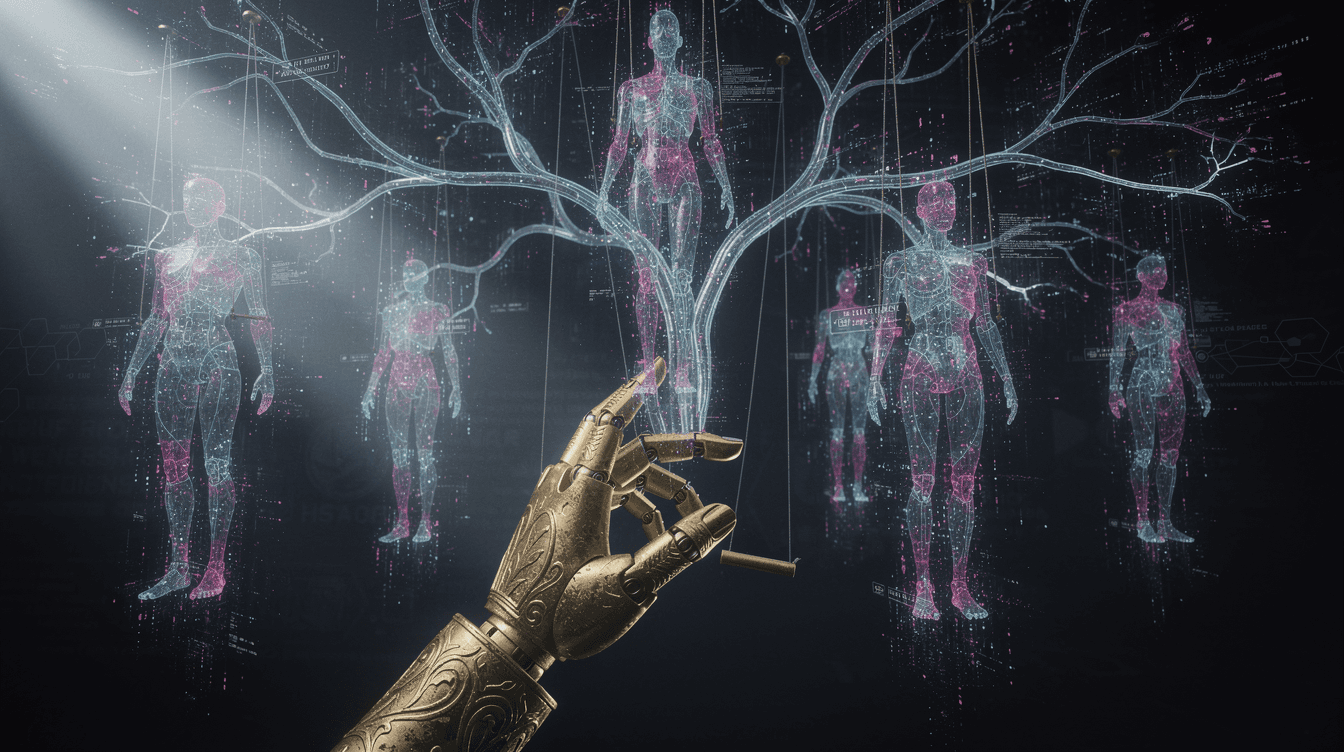
What Science Superpowers Does
Science Superpowers turns a research‑capable AI agent into a disciplined scientific collaborator. Instead of letting the agent jump straight to running code on your data, it enforces a rigorous preregistered workflow.
Its core discipline is preregistration — the equivalent of test‑driven development in coding. A fuzzy interest becomes a falsifiable question with clear hypotheses and decision rules before data is touched. This protects against p‑hacking and HARKing, separates confirmatory from exploratory analyses, and locks predictions in advance.
Every analysis runs in an isolated, reproducible workspace (pinned environment, fixed seeds, immutable raw data). Results are verified against freshly reproduced output, attacked by a red‑team review, and anomalies are root‑caused rather than quietly dropped.
The Ten‑Step Research Lifecycle
When you start a research task, the agent automatically follows these steps, triggered by skill files:
- Framing — sharpen interest into a falsifiable question.
- Surveying prior work — ground the question in existing knowledge.
- Designing the analysis — break work into concrete, powered steps.
- Preregistering — lock hypotheses and decision rules before seeing outcomes.
- Setting up a reproducible workspace — isolated, pinned, seeded.
- Executing the plan — via subagent or batch, with checkpoints.
- Investigating anomalies — a four‑phase root‑cause process.
- Verifying results — re‑run, check assumptions, reproduce evidence.
- Red‑team review — skeptical review and rigorous response.
- Reporting and archiving — decide on preprint, shelve, or discard; archive everything.
This structured research workflow ensures confirmatory claims stay protected, anomalies are explained, and every number can be reproduced — without you managing steps.
Installation: One Setup Per Harness
Science Superpowers is a set of skill files (SKILL.md) and bootstrap hooks with zero third‑party dependencies — just an AI agent harness and a POSIX shell.
Installation is harness‑specific.
For Cursor, use the plugin marketplace or point Cursor at the repository; the sessionStart hook auto‑loads the bootstrap.
For Claude Code, register the repository as a marketplace and install the science-superpowers plugin; the SessionStart hook handles boot.
Codex uses the .codex-plugin/plugin.json manifest, Gemini CLI installs an extension pointing to GEMINI.md, OpenCode follows .opencode/INSTALL.md, and Google Antigravity reads GEMINI.md/AGENTS.md as always‑on rules.
After installation, the agent picks up the skills automatically at the start of each session. No configuration files or tuning needed.
Daily Use: Just Talk, No Commands
You never invoke a skill by name. You talk to your agent normally, and the skills trigger themselves.
For example, asking about churn data triggers preregistration before touching the CSV. The agent steps back, frames a falsifiable question, surveys prior analyses, designs the study, and preregisters hypotheses and decision rules. Then it runs the plan in a reproducible workspace, root‑causes any anomaly (like a logging gap), verifies results, and red‑teams its own conclusion.
The outcome is a protected confirmatory claim, explained anomalies, and full reproducibility — all without you managing a workflow step. You just ask a question.
Configuration, Limits, and Best Practices
Science Superpowers uses no environment variables or config files.
The hook files (e.g., hooks/hooks-cursor.json) are the sole bootstrap mechanism, set up once.
Limitations: The README doesn’t list explicit bugs or unsupported scenarios.
The methodology relies on the agent being able to execute code in a POSIX environment and understand SKILL.md.
If the agent cannot run arbitrary code or the format, automatic triggering won’t work.
Best practices encoded in the philosophy:
- Always pre‑register — state predictions before seeing outcomes (the Iron Law).
- Label every analysis confirmatory or exploratory.
- Make the workspace reproducible — pinned packages, fixed seeds, immutable data.
- Verify before claiming; root‑cause anomalies; red‑team your own conclusions.
- Extend the system by creating new skills following the
writing-science-skillsdiscipline.
Extending and Maintaining
If you need a capability not included, use the writing-science-skills meta‑skill to create a new SKILL.md file that follows the same testing methodology.
Contributor guidelines are in AGENTS.md/CLAUDE.md.
The repository supports multiple agent harnesses independently; there is no unified installer. If you use both Cursor and Claude Code, install Science Superpowers in each. The skill files are identical — only the bootstrap loading varies.
No formal upgrade path is documented. The project is released under the MIT license; to get the latest files, clone the repository again.