
LLM
Page 2 of 7

How LFM2.5-8B-A1B Powers On-Device AI with Unmatched Throughput
LFM2.5-8B-A1B is a new family of hybrid models designed for on-device deployment, building on the LFM2 architecture with extended pre-training and reinforcement learning. It offers competitive performance with larger models on instruction following and agentic tasks, boasting unmatched throughput on CPU and GPU inference with day-one support for llama.cpp, MLX, vLLM, and SGLang.

Prompting Claude for Critical Feedback and Deeper Insights
User-derived strategies for optimizing Claude's performance in writing and research. Learn how to prompt for critical feedback, effectively manage long contexts, and leverage editing over generation to achieve more specific, insightful AI outputs.

ChatGPT's Memory System: Invasive, Irrelevant, or Inevitable?
A new ChatGPT memory system, generating and carrying conversation summaries, faces user criticism for being invasive, irrelevant, and detrimental to structured projects. Observed behaviors include continuous "gigantic summaries," meta-level statements, and cross-chat context carrying, sparking user annoyance and frustration over lack of control.

How UNISON Unifies Audio and Speech Generation with Deep LLM Fusion
UNISON is a unified latent flow-matching framework for audio and speech generation and editing. Using a single set of weights, it integrates text-to-audio, text-to-speech, zero-shot speaker cloning, mixed speech-and-sound scene generation, and audio/speech-in-scene editing—all in one model, one architecture, one forward pass, leveraging deep LLM fusion with Qwen2.5-Omni-7B.
Philosophy, Not Just Data, Holds the Key to Deeper AI
This article argues for integrating philosophical principles into AI priming to achieve more profound and ethically sound artificial intelligence. Moving beyond data-centric training, it explores how philosophical frameworks can enable AI to generate more meaningful and contextually rich responses.

Harness-1: Reinforcement Learning for Search Agents
Harness-1 introduces a novel approach to reinforcement learning for search agents through state-externalizing harnesses. This project, detailed in arXiv:2606.02373, provides a framework for advanced AI agent development.

How to Delegate LLM Tasks with cc-fleet in Claude Code
Learn how to use cc-fleet to delegate tasks to various large language models (DeepSeek, GLM, Qwen, Kimi, MiniMax) within Claude Code. This guide covers installation, vendor registration, and leveraging cc-fleet as a secure Claude Code teammate or one-shot headless subagent, protecting your primary credentials and managing vendor API keys securely.

Cosmos 3: Omnimodal World Models for Physical AI
NVIDIA introduces Cosmos 3, a cutting-edge omnimodal world model designed for physical AI applications. This project leverages diverse data inputs to enable robots and embodied AI systems to better understand and interact with the physical world, pushing the boundaries of autonomous intelligence.

What is Ideogram 4: The Open-Weight Text-to-Image Foundation Model?
Ideogram 4 is Ideogram's first open-weight text-to-image foundation model, trained from scratch. It features a new structured JSON prompting interface, best-in-class multilingual text rendering, deep language understanding, explicit layout/color controls, and native 2k resolution. It leads open-weight models in Design Arena and ContraLabs typography evaluations.
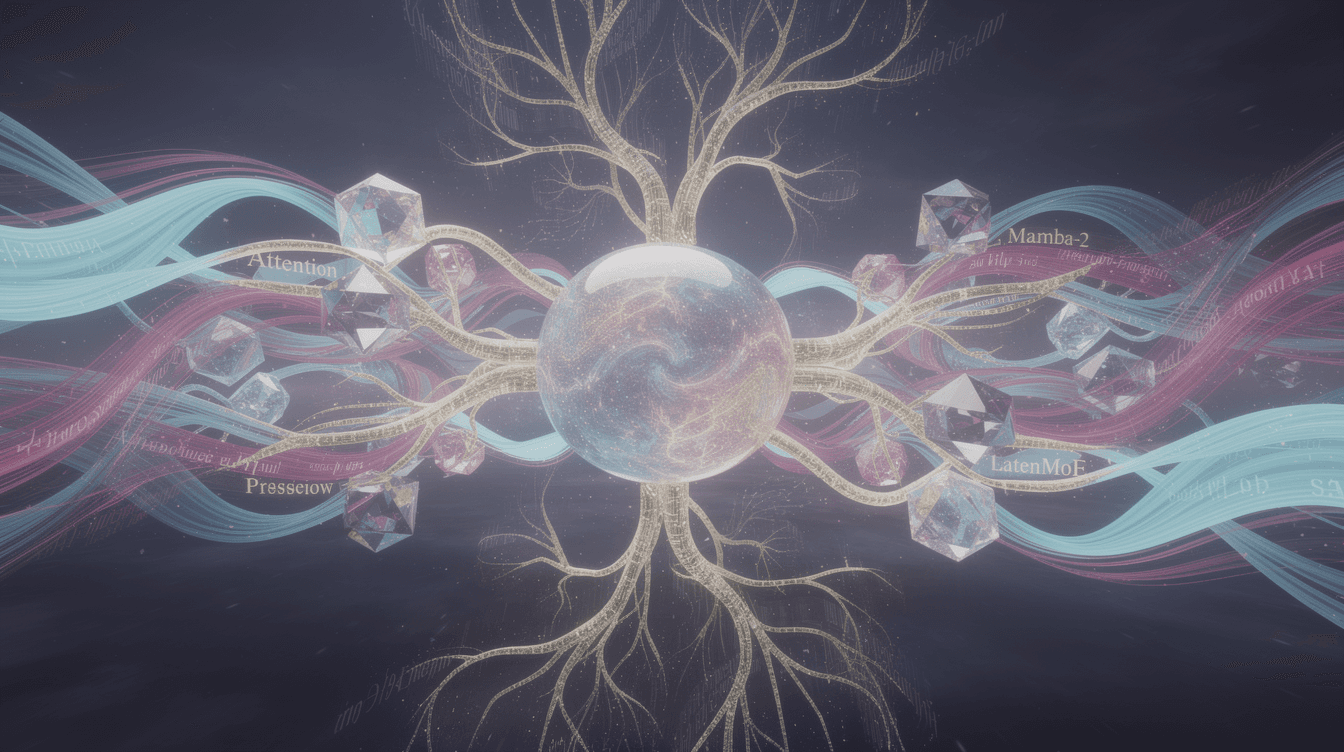
NVIDIA Nemotron-3-Ultra 550B: A Frontier LLM for Complex AI Workflows
Nemotron-3-Ultra-550B-A55B-BF16 is a frontier-scale LLM by NVIDIA, featuring a LatentMoE architecture, Mamba-2 + MoE + Attention hybrid, and Multi-Token Prediction. Designed for complex multi-step agents, long-context analysis, and high-accuracy reasoning across multiple languages, it offers configurable reasoning and is released under the OpenMDW License.

Claude Opus 4.8: The Case of Recursive Doubt and Entangled Reasoning
User reports on Reddit highlight concerning patterns in Claude Opus 4.8, including self-contradiction within its extended thinking, high token consumption, and "spinning" behavior, raising questions about its reasoning stability.

The Fable Prompt Technique: Building Understanding from the Inside Out
Explore Amanda Askell's Fable Prompt Technique, a powerful method for conceptual understanding. This Anthropic-originated approach uses indirect narrative and cognitive friction to build robust mental models, mirroring Claude's alignment philosophy.