
Agents
Page 3 of 6

How Bidirectional Evolutionary Search Improves LLM Self-Improvement
This article explains Bidirectional Evolutionary Search (BES), a new framework that enhances LLM self-improvement by combining evolutionary operators for broader exploration with dense, intermediate feedback from goal decomposition. Learn how BES tackles the limitations of traditional sampling methods like best-of-N and tree search.

Why Gaussianity is Key to Identifiable World Models in AI
Explore the "if and only if" theorem behind LeJEPA's success in representation learning. Understand the role of Gaussian distributions, alignment, and regularization in achieving linear identifiability in AI's quest for robust world models.

MiniMax Unveils M2 Series, Teases M3 with 9.7x Speedup via Sparse Attention
MiniMax releases a technical report on its M2 model series, featuring a sparse Mixture-of-Experts backbone and innovative "interleaved thinking." The report also previews the upcoming M3 model, which achieves a 9.7x prefilling speedup with MiniMax Sparse Attention (MSA) for 1-million-token sequences, pushing AI efficiency boundaries.

Inside Enterprise Security for Agentic Workflows
Anthropic's latest Claude Managed Agents update introduces self-hosted sandboxes and MCP tunnels, fundamentally changing how enterprises deploy autonomous AI. This deep dive covers the new security architecture, allowing agents to execute tools and access services within an organization's perimeter, crucial for regulated industries.

What is MiniCPM5-1B and How Does Its Dual-Mode Architecture Work?
Discover MiniCPM5-1B, an efficient 1B-parameter causal language model optimized for local and resource-constrained environments. Learn about its Llama-based architecture, impressive 131K context window, and innovative 'Think' and 'No Think' modes that enable it to function as both a fast assistant and a deliberate reasoner from a single checkpoint.

SkillOpt: Optimizing LLM Behavior with Trainable Skill Documents
SkillOpt optimizes large language model behavior by iteratively refining natural-language "skill documents" through a propose-and-test loop. It uses an optimizer model to suggest edits, applies them under a bounded textual learning rate, and validates improvements, ensuring robust and portable domain adaptation for even closed-source frontier models.
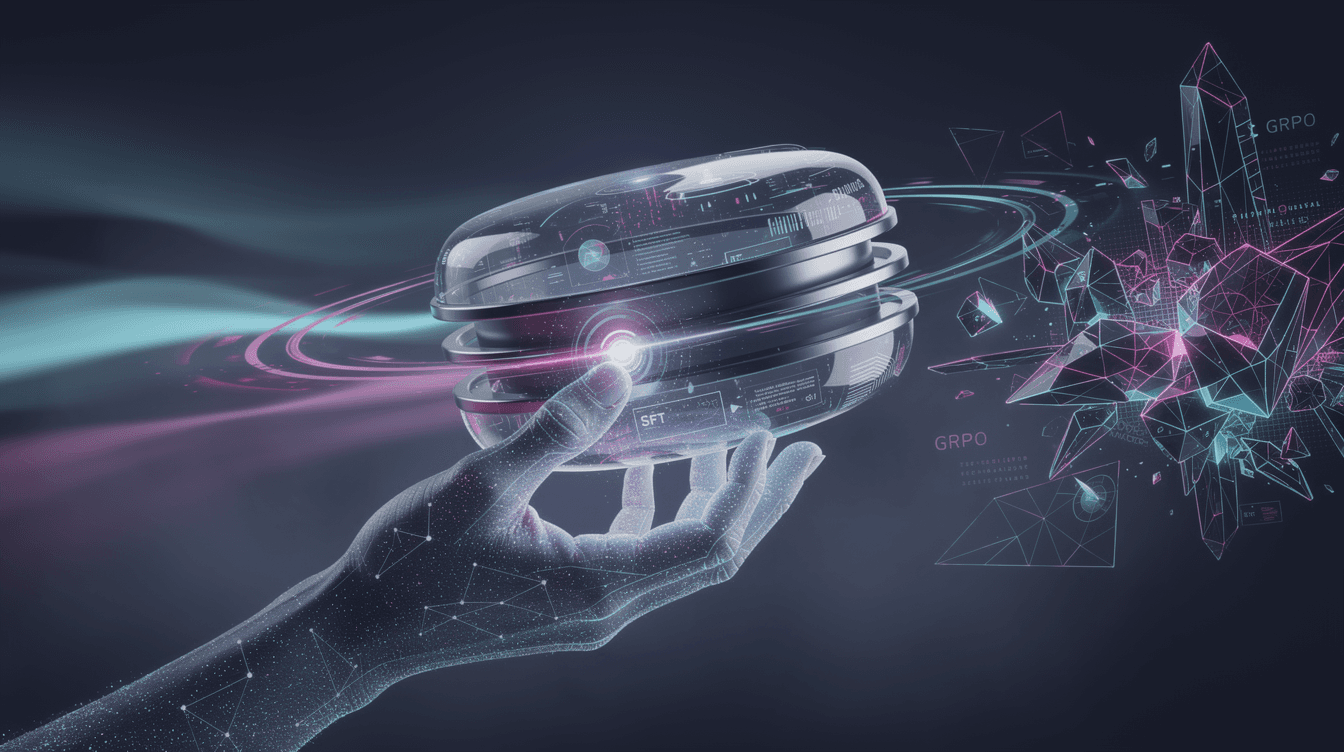
Generative UI: Revolutionizing AI Agent Interactions Beyond Plain Text
Discover Macaron-A2UI, a groundbreaking model that allows AI agents to generate interactive UI elements using a declarative protocol. Learn about its comprehensive corpus construction, A2UI-Bench for structured evaluation, and a two-stage training recipe combining SFT and GRPO to enhance user experience and agent capability.

ProAct: A Proactive AI Assistant Architecture for Anticipatory Computing
This article delves into ProAct, a proactive AI assistant designed to anticipate user needs and acquire information during idle times. By shifting computation from peak interaction periods, ProAct aims to reduce user effort, accelerate task completion, and improve factual grounding through a closed-loop system of prediction, acquisition, and utility-aware delivery.
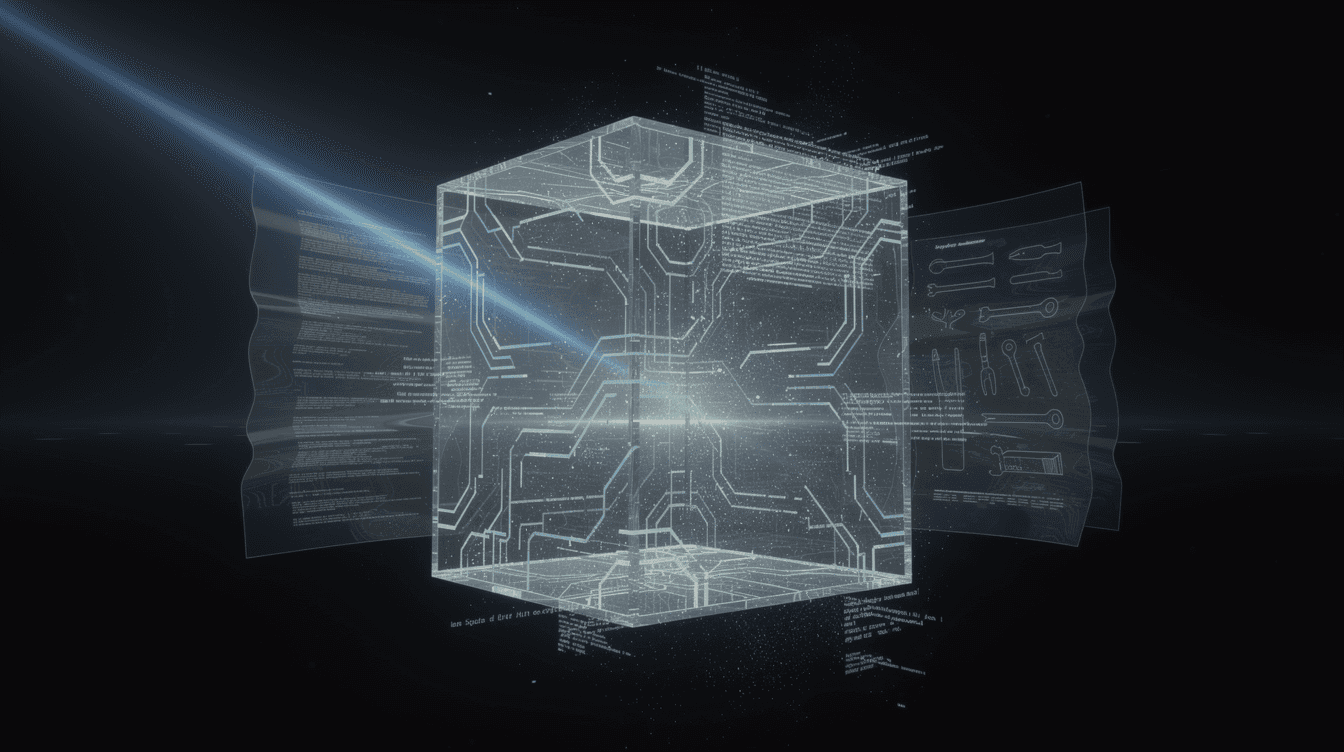
How to Inspect and Debug AI Agent API Calls with ccglass
Discover ccglass, a local logging reverse-proxy and web dashboard that provides deep insights into AI agent API requests. Learn how to inspect prompts, tool schemas, message history, and cost data for various coding agents and IDEs, bypassing common proxy limitations.

What is SmallCode? A Terminal-Native AI Coding Agent
Explore SmallCode, a terminal-native AI coding agent designed to make 8B–35B parameter local language models powerful for programming. Learn about its context budget management, patch-first editing, TODO-driven planning, and interactive TUI, enabling efficient development fully locally.

How FigMirror Automates Publication-Quality Figure Generation
Learn about FigMirror, a tool that automates the creation of publication-quality figures. Understand its agentic Drawer-Reviewer loop, Grounded Measurement, and Aesthetic Library, and explore its Web UI and skill-only installation modes for coding agents.

How to Give AI Coding Agents Persistent Memory and Context
Learn how AI-Memory solves the context loss problem for AI coding agents. This tool provides a persistent, Git-versioned Markdown wiki, enabling cross-agent handoffs, automatic context capture, and project isolation for a truly continuous AI-assisted development workflow.